
How Much Solar Power Do I Need for My RV?
If you love freedom, comfort, and sustainability on the road, adding solar power to your RV is one of the smartest upgrades you can make. With the right setup, you can camp off-grid for days, power your devices quietly, and reduce fuel costs — all while protecting your vehicle’s electrical system.
But the question remains: how much solar power do you really need for your RV? This guide explains everything — from what RV solar panels are and what to consider before buying, to how to calculate your ideal wattage and install your system confidently.
What Are RV Solar Panels?
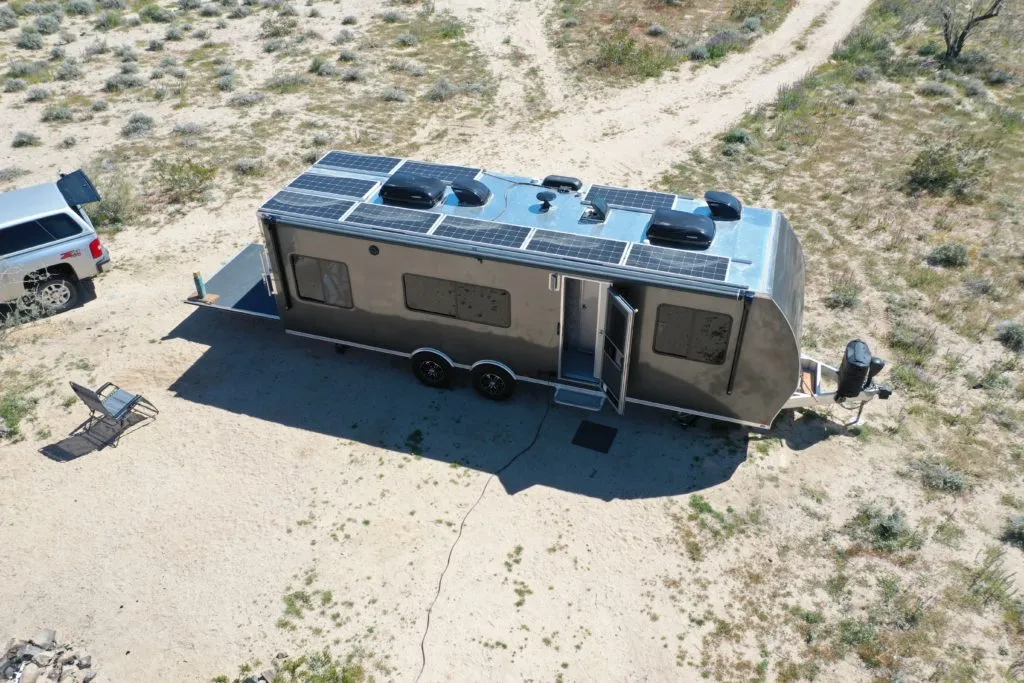
RV solar panels are photovoltaic (PV) modules that convert sunlight into usable electricity. The power generated flows through a charge controller into your battery bank, which stores energy for your appliances and electronics.
A complete RV solar system typically includes:
-
Solar panels – the main energy source
-
Charge controller – regulates charging to prevent overcharging batteries
-
Batteries – store energy for night and cloudy days
-
Inverter (optional) – converts DC to AC for household appliances
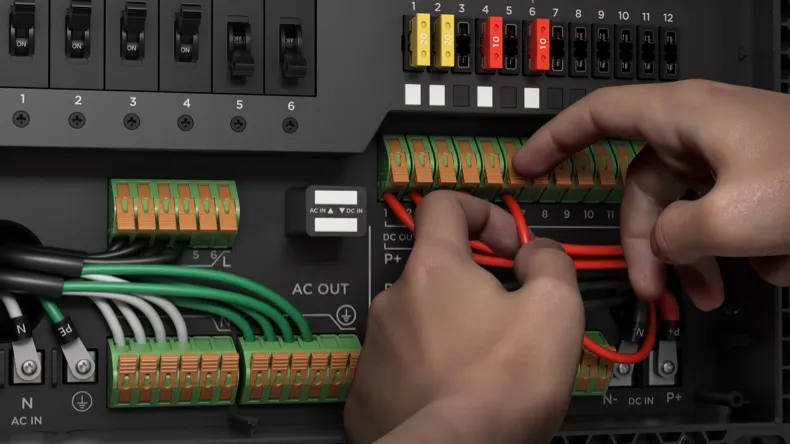
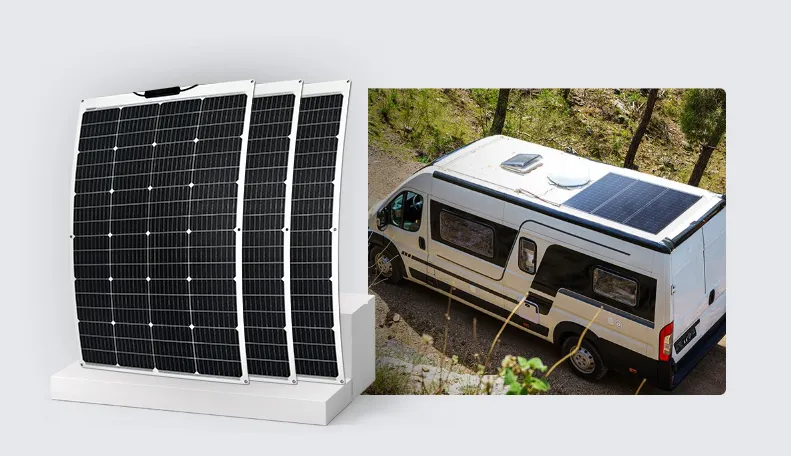
At Sungold Solar, our PA219 flexible solar panelsand PA621 lightweight solar panels are designed specifically for vehicle rooftops — ultra-thin, lightweight, and high-efficiency, ideal for curved or low-load RV roofs.
What to Consider When Buying RV Solar Panels
Choosing the right solar setup means balancing your energy use, space, and travel habits. Here are the key points to think about:
1. Your Power Consumption
Start by estimating your daily energy use.
List each device (lights, fridge, fans, chargers) and note its wattage × hours of use.
Example: a 40W fridge running 10 hours = 400Wh/day.
If your total equals ~700Wh/day, that’s around 60Ah/day on a 12V system.
2. Battery Type and Capacity
Solar panels charge your house batteries — so their capacity matters.
-
Lead-acid batteries shouldn’t discharge below 50%.
-
Lithium batteries allow deeper discharge (up to 80–90%) and recharge faster.
Matching your solar wattage to your battery size ensures stable charging.
(Example: 300Ah battery bank → about 300W solar system.)
3. Efficiency and Real Output
A “100W” panel doesn’t always produce 100W in real use.
Factors like sunlight hours, temperature, and shading affect performance.
On average, a 100W panel generates about 30Ah (360Wh) per day.
If your RV needs 60Ah/day, you’ll likely need two 100W panels or one 200W panel.
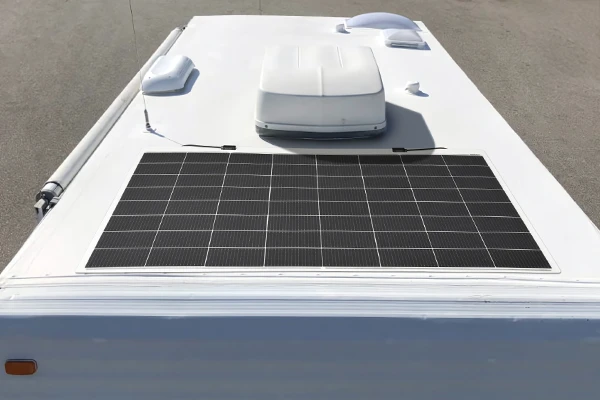
4. Roof Space and Mounting Options
RV roofs have limited flat area. Before purchasing, measure available space and plan around vents or antennas. Flexible panels like Sungold’s PA621 can contour along curved roofs and avoid drilling — ideal for lightweight or aerodynamic vehicles.
5. Expandability and Durability
Choose a modular system that can scale with your needs. Look for panels that:
-
Support parallel/series wiring for future expansion
-
Have anti-shade bypass design (Sungold’s PA219 series uses this feature)
-
Offer vibration-resistant lamination for long-term road durability
How Much Solar Do I Need for My RV?
Your solar sizing depends on your daily consumption and how many sunlight hours you get.
Step 1: Calculate Your Energy Use
If you don’t want to do math, try this simple field test:
-
Fully charge your batteries.
-
Go camping for two days without plugging in.
-
Check how much your battery percentage dropped.
If you used half of your 200Ah bank, that’s 100Ah in two days = 50Ah/day.
Step 2: Estimate Solar Production
-
Each 100W panel ≈ 30Ah/day under average sun conditions.
-
Therefore, 200W ≈ 60Ah/day, enough to offset typical daily use.
-
Add 20–30% buffer for cloudy days or shade.
Step 3: Match with Battery Bank
etrailer’s reference chart aligns well with real-world setups:
| Daily Use (Ah) | Recommended Solar (W) | Typical Battery Bank |
|---|---|---|
| 30Ah/day | 100–120W | 1–2 batteries |
| 60Ah/day | 180–200W | 2–4 batteries |
| 120Ah/day | 300–400W | 4 batteries |
| 190Ah/day | 600–700W | 4–6 batteries |
| 300Ah+/day | 1000W+ | 6–8 batteries |
This helps ensure your solar input balances your energy use.
Step 4: Add Flexibility for Real Conditions
If you often camp under trees or during cloudy weather, consider adding:
-
A portable solar kit to supplement rooftop panels
-
A solar charge monitor to track daily output
-
Higher-efficiency monocrystalline panels for better low-light performance
Installing Solar Panels on an RV
Installation can be DIY-friendly, but proper planning matters.
1. Layout Planning
-
Find a sun-exposed area on your roof.
-
Avoid vents, AC units, or shadows.
-
Use cardboard templates to visualize placement before drilling.
2. Mounting
-
Clean the roof surface thoroughly.
-
For flexible panels like Sungold PA219, use adhesive or mounting tape — no drilling required.
-
Seal edges with UV-resistant silicone to prevent water ingress.
3. Wiring
-
Connect panels to a charge controller, then to your batteries.
-
Use MC4 connectors and weatherproof cable glands.
-
Secure wires to prevent vibration damage.
-
Install inline fuses and breakers for safety.
4. Testing and Monitoring
Once connected:
-
Check voltage and charging status on your controller.
-
Observe daily charge cycles and adjust panel angles if portable.
-
Optional: integrate a Bluetooth battery monitor for easy tracking.
Why Choose Sungold Solar for Your RV System
Sungold Solar has over 18 years of experience designing custom off-grid solar solutions. Our panels are:
-
Lightweight & flexible: PA219 and PA621 series reduce roof load by 60%.
-
Durable & vibration-resistant: Designed for RV, truck, and marine use.
-
High-efficiency: Up to 24% conversion efficiency with IBC/BC cell tech.
-
Certified & reliable: Tested to IEC61215 and IEC61730 standards.
We help RV owners and OEMs build complete vehicle-mounted PV systems that balance power, safety, and design.
Conclusion
The right RV solar system frees you from hookups, cuts fuel costs, and gives you energy independence wherever you travel.
Start by calculating your energy use, match it to realistic solar output, and choose reliable, flexible panels that suit your vehicle.
With Sungold’s lightweight RV solar panels, you can enjoy quiet, sustainable power on every journey — whether parked in the desert, mountains, or forest.
👉 Explore Sungold’s full range of RV solar solutions here:
www.sungoldsolar.us/rv-solar-panel