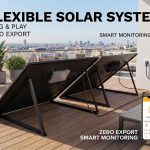

Plug-in Solar System for Balcony: Easy Solar Power with Flexible Installation
A plug-in solar system provides an easy way to generate renewable energy by combining solar panels, microinverters, and smart monitoring technology. Designed for balconies, terraces, and urban spaces, it offers a simple alternative to traditional rooftop solar installations.
What Is a Plug-in Solar System?
A plug-in solar system is a small-scale solar energy solution designed to connect photovoltaic panels with household electricity systems through a simplified installation process.
Unlike traditional rooftop solar systems that usually require professional installation and complex wiring, plug-in solar systems are designed to make solar energy more accessible for homeowners, renters, and urban residents.
Common applications include balconies, patios, terraces, gardens, and other areas where installing a full rooftop solar system may not be practical.
How Does a Plug-in Solar System Work?
A plug-in solar system converts sunlight into usable electricity through several integrated components. Solar panels generate DC power, a microinverter converts it into AC electricity, and smart monitoring helps users track system performance.
|
01
|
→ |
02
|
→ |
03
|
Plug-in Solar System Components
|
|
|
|
Benefits of a Plug-in Solar System
|
⚡
|
🏠
|
📱
|
How Does Zero Export Work in a Plug-in Solar System?
Some plug-in solar systems can integrate zero export technology to manage electricity flow between solar generation, household consumption, and the grid.
When solar production exceeds household demand, smart control technology can adjust system output to reduce unnecessary electricity export.
|
01
|
→ |
02
|
→ |
03
|
→ |
04
|
Plug-in Solar System Applications
Plug-in solar systems are designed for locations where traditional rooftop solar may be difficult or unavailable. Their flexible design makes them suitable for various residential and urban applications.
|
|
|
Why Use Flexible Solar Panels in Plug-in Solar Systems?
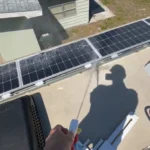
Flexible solar panels provide additional advantages for plug-in solar applications where weight, space, and installation flexibility are important considerations.
|
|
|
Plug-in Solar System vs Traditional Rooftop Solar
Feature |
Plug-in Solar System |
Traditional Solar System |
|---|---|---|
Installation |
Simplified installation process |
Professional installation required |
Application Space |
Balcony, terrace, small spaces |
Large rooftop areas |
System Scale |
Small-scale residential solar |
Large photovoltaic systems |
Frequently Asked Questions About Plug-in Solar Systems
What is a plug-in solar system?
A plug-in solar system is a small-scale solar solution that combines solar panels, microinverters, and monitoring technology to provide accessible renewable energy generation.
Can plug-in solar systems be used on balconies?
Yes. Balcony applications are one of the most common uses because plug-in solar systems require limited installation space.
Are plug-in solar panels easy to install?
Plug-in solar systems are designed to simplify installation compared with traditional rooftop solar solutions. However, local electrical requirements should always be considered.
What are the advantages of flexible plug-in solar panels?
Flexible solar panels provide lightweight construction, easier integration, and more installation possibilities for balconies and customized spaces.
Build Your Custom Plug-in Solar Solution
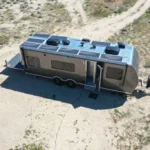
Sungold provides flexible solar panels and OEM/ODM solar solutions for balcony, residential, RV, marine, and off-grid applications.