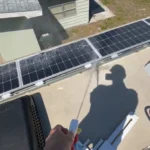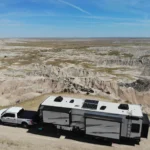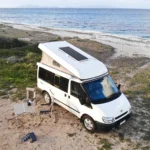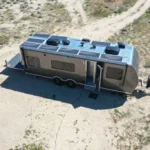

If you’ve been searching “how much solar power do I need for my RV” or “how to mount solar panels on RV”, here’s the simplest way to size a system that works in real life:
-
List what you run + how long you run it
-
Calculate your daily energy use in watt-hours (Wh)
-
Divide by average “peak sun hours” (PSH) — in much of the U.S., a common planning number is about 4–6 hours/day (often ~4–5)
-
Add 20–25% extra capacity to cover clouds + efficiency losses (heat, wiring, controller losses, shading)
Below is a step-by-step calculator you can copy, plus mounting options that fit common RV roofs.

Step 1: List your devices (watts) + daily use time (hours)
Use your actual labels when possible. If you’re estimating, here are common RV reference wattages to sanity-check your list:
-
Microwave: ~1500W (short bursts)
-
Space heater: ~1500W (huge daily load)
-
RV fridge on 120VAC: ~300W (if running on AC)
-
40″ LED TV: ~20W
-
Satellite receiver: ~115W
For 12V compressor fridges (very common in modern builds), daily energy is typically ~240–600 Wh/day depending on temperature and use .
Copyable daily-use table (fill in yours)
| ppliance | Rated (Running) Watts | Starting Watts |
| Dishwasher | 1300 | 1800 |
| Washing Machine | 1200 | 2300 |
| Refrigerator/Freezer | 700 | 2200 |
| Light Bulb | 60-75 | 0 |
| Microwave | 600-1000 | 0 |
| TV | 500 | 0 |
| Toaster | 900 | 0 |
| Vacuum | 1440 | 2500 |
| Coffee Maker | 1000 | 0 |
| Blender | 300 | 800 |
| Clothing Iron | 1500 | 0 |
| Dryer | 5400 | 7000 |
| Toaster Oven | 1200 | 0 |
| Curling Iron | 1500 | 0 |
| Space Heater | 2000 | 0 |
| Laptop | 50-300 | 0 |
| 20” Box Fan | 200 | 350 |
Step 2: Calculate total daily watt-hours (Wh)
Formula:
Daily Wh = Watts × Hours used per day
Then add everything up:
Total Daily Use (Wh/day) = Σ (W × h)
Example quick math:
-
TV: 20W × 4h = 80Wh
-
Satellite receiver: 115W × 4h = 460Wh
-
Fridge (typical): ~400Wh/day (varies)
-
Lights + charging + pump: ~300Wh/day (your numbers vary)
Total ≈ 1,240Wh/day
Step 3: Divide by average daily sun (Peak Sun Hours)
Solar panels don’t produce “rated watts” all day. The planning shortcut is Peak Sun Hours (PSH) — the equivalent number of hours per day at strong sunlight intensity (commonly benchmarked at 1,000 W/m²) .
A practical U.S. planning range for RV travel is often ~4–6 PSH/day (many places average around 4–5) .
Step 4: Size your solar watts + add 20–25% buffer
Base Solar Watts = Total Daily Wh ÷ PSH
Then add buffer:
Recommended Solar Watts = Base Solar Watts × 1.20 to 1.25
Example A: “Minimum” weekend power (200–300W range)
Let’s say your total is 1,000 Wh/day and you plan with 5 PSH:
-
Base = 1,000 ÷ 5 = 200W
-
With 25% buffer = 200 × 1.25 = 250W
Result: 200–300W is often enough for charging, lights, fans, water pump, and a modest 12V fridge (depending on conditions). This aligns with common “small-to-mid” real-world guidance ranges too .
Example B: “Normal off-grid” (600–1000W range)
If you’re closer to 3,500 Wh/day with 5 PSH:
-
Base = 3,500 ÷ 5 = 700W
-
With 25% buffer = 700 × 1.25 = 875W
Result: ~800–1000W is a realistic target for heavier daily use (more electronics, longer inverter time, more fridge load, etc.).
Heads-up on high-draw appliances
Anything that makes heat or cools air (space heater, electric cooking, RV A/C) can explode your daily Wh fast. For example, space heaters are commonly ~1500W — even 2 hours/day is 3,000Wh by itself.
Quick sizing cheat sheet (typical planning)
Use this when you want a fast answer before doing the full table:
-
200–300W: minimum needs (charging + lights + small loads; maybe efficient fridge if you’re careful)
-
400–600W: comfortable weekend + moderate boondocking
-
600–1000W+: heavier inverter use, longer off-grid stays, more “home-like” habits
To be accurate, always go back to: Wh/day → ÷ PSH → +25%.
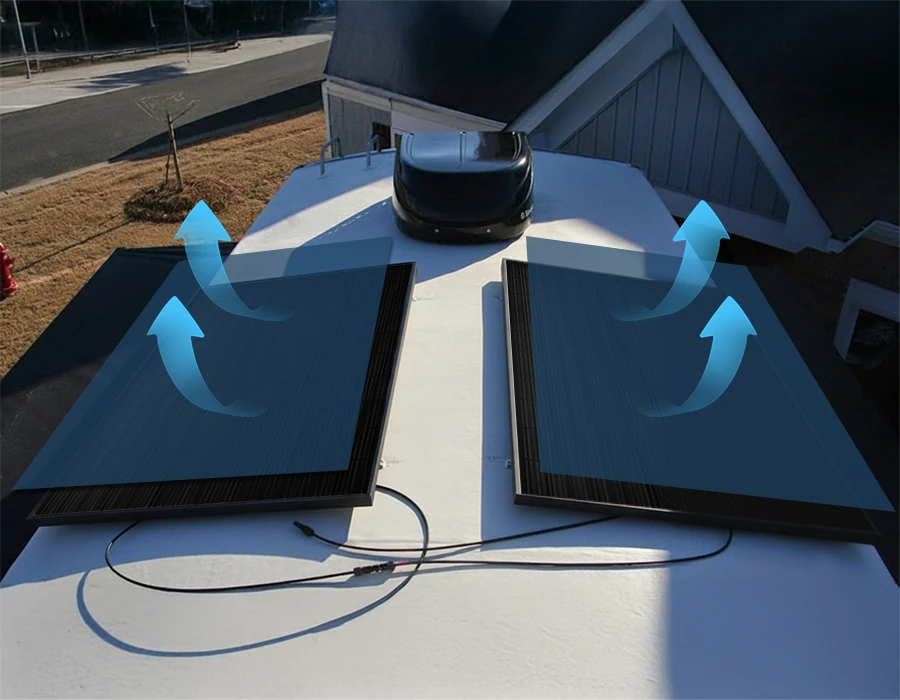
How to Mount Solar Panels on an RV (4 practical options)
Mounting matters because shading, airflow, and roof leaks can make a “perfect” solar plan fail.
Option 1: Brackets/rails + sealed roof penetrations (most robust for rigid panels)
Best for: rigid panels on flat/firm roofs, high-speed travel, long-term durability
Pros: strong, allows airflow under panels (cooler panels = better output)
Cons: requires drilling; must seal correctly
Best practice: use purpose-built mounts/rails, spread load, and seal all penetrations properly.
Option 2: Adhesive mounting (VHB tape + mounting feet/rails) — drill-free
Best for: people who strongly want no holes, especially on newer/clean surfaces
Strong industrial tapes like 3M VHB are designed to replace mechanical fasteners in many applications , and many van/RV builders use VHB with brackets/feet.
Key cautions (important):
-
Adhesive is only as strong as the surface prep and the roof material/finish.
-
Real-world installers often recommend VHB only on good, intact surfaces and checking mounts regularly .
Option 3: Direct-bond flexible panels (lowest profile, but watch heat)
Best for: curved roofs, very low profile builds
Pros: light and sleek
Cons: flexible panels can run hotter when bonded flat with no airflow, which can reduce performance and longevity (many RVers avoid fully “sealed-to-roof” installs for this reason).
If you go flexible, consider a mounting method that allows some breathing/air gap where possible.
Option 4: Portable “suitcase” panels (easy, but not theft-proof)
Best for: shade camping + you can place panels in sun
Pros: you can park in shade and deploy panels in sun
Cons: setup hassle, security, storage space
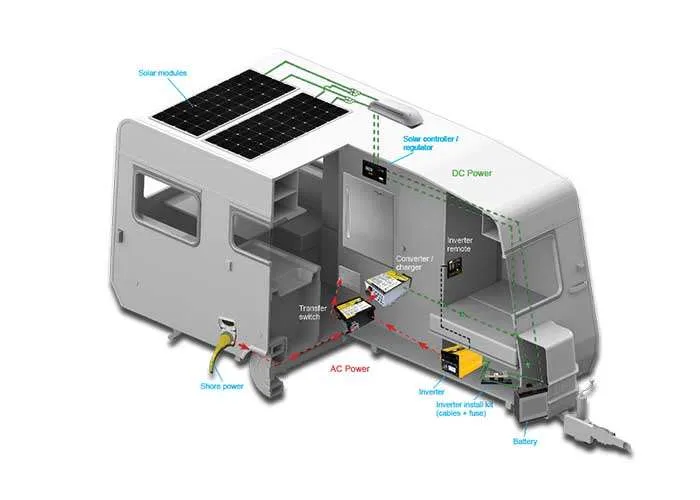
Mounting checklist (avoid the most common regrets)
-
Map roof shade sources (A/C, vents, antennas). Small shadows can cut output more than you’d expect.
-
Plan cable routing (entry gland, strain relief, UV protection).
-
Seal everything (water intrusion is the #1 RV solar install nightmare).
-
Leave maintenance access (you will eventually need to service something).
-
Use a realistic PSH for where you travel most (NREL maps + PVWatts help).
FAQ
How much solar power do I need for my RV?
Start by calculating daily Wh use, divide by 4–6 peak sun hours, then add 20–25% buffer for losses and cloudy days.
How much solar do I need for my RV for minimum use?
For light loads (charging, lights, fans, short inverter use), many RVers land around 200–300W, depending on your Wh/day and sunlight.
How much solar power do I need for RV boondocking?
If your daily use is moderate-to-high (more inverter time, more electronics), it commonly lands in 600–1000W+ once you account for PSH and buffer.
How to mount solar panels on RV without drilling?
Adhesive/VHB-based mounting is popular because it can avoid traditional fasteners , but roof type and prep are critical—and some rubber roofs are widely considered risky for tape-only installs