
1000 Watt Solar Panel Kit for RV (USA): What It Really Powers + How to Build It Right
If you’ve ever tried to boondock for more than a night, you already know the truth: power—not water—is what ends trips early. A 1000 watt solar panel kit for RV is the “sweet spot” many U.S. RVers aim for because it can support real daily living (fridge, devices, cooking bursts) without running a generator nonstop.
But “1000W” is only the beginning. What matters is how you match panels + charge control + battery + inverter + wiring to your actual habits—because there’s no true one-size-fits-all setup.
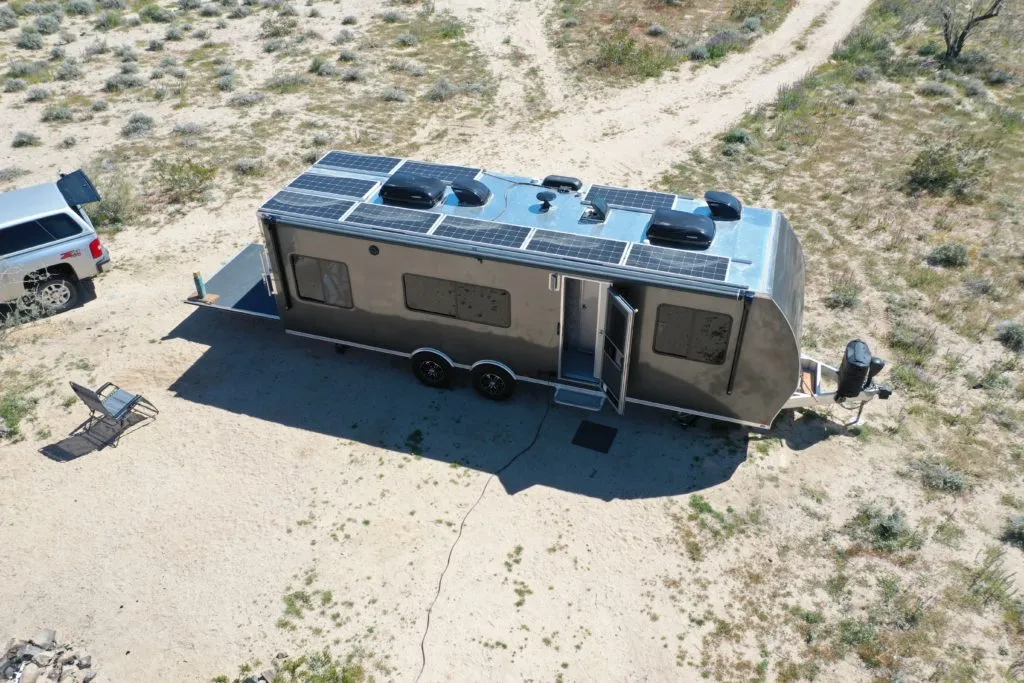
What “1000 Watt Solar Panel Kit” Usually Includes (and what it should include)
Some sellers describe a “minimal” kit as panels + inverter, then you add battery + charge controller if you want overnight or cloudy-day capability.
For RV use, a practical “kit” (even if purchased in parts) usually means:
-
Solar panels (1000W total)
-
MPPT charge controller(s) (RV shading makes MPPT worth it)
-
Battery bank (this is what runs the RV at night)
-
Inverter (if you want 120V outlets like shore power)
-
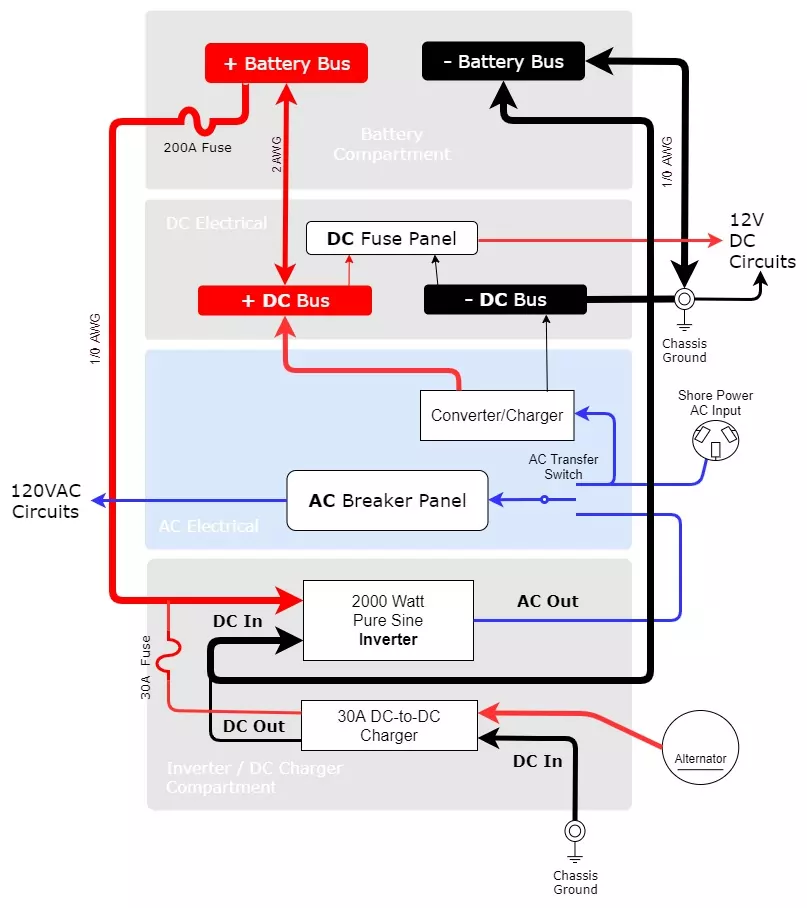
Proper protection: fuses/breakers, disconnects, correct cable size
RV systems are held together (or fall apart) on the “boring parts”: wiring, protection, and component matching.
How Much Power Will 1000W of Solar Actually Produce in the U.S.?
A simple way to estimate daily energy is:
Daily Wh ≈ Solar Watts × Peak Sun Hours × System Efficiency
Rule-of-thumb reality for many RVers:
-
On a solid sunny day, 1000W can feel abundant
-
On partial shade, winter sun, storms, or smoky days, production can drop hard
Real-world build style (why 1000W is popular)
Many Class C / travel trailer boondocking builds around 1000W follow this pattern:
-
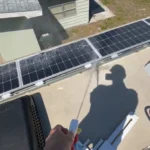
~1000W on the roof (semi-flex or rigid depending on roof)
-
Optional portable panel add-on for shade-camping flexibility
-
~400Ah LiFePO4 battery bank (common target)
-
~2000W pure sine inverter
-
MPPT charge controllers, sometimes split across roof zones
With good sun, it’s common that partial overnight use can be replenished by late morning or midday—as long as the system is sized and wired correctly.
What Can a 1000W RV Solar Setup Run?
It depends on your battery + inverter, but here’s a practical expectation list.
Usually easy (daily)
-
12V fridge (if efficient)
-
Lights, fans, water pump
-
Phones, laptops, internet gear
-
TV for a while
-
Short microwave bursts
Possible with the right battery/inverter (but watch usage timing)
-
Induction cooktop (short periods)
-
Coffee maker
-
Hair dryer (short burst, large inverter)
Not “all day” realistic for most rigs
-
Air conditioner continuous (you can sometimes run it briefly with a big battery/inverter, but solar alone usually won’t cover all-day AC)

Step 1: Size your battery bank first (not your panels)
Solar generates power; batteries store it. If you want quiet nights, battery sizing matters more than hitting exactly 1000W of panels.
Quick battery math (usable energy)
-
Usable Wh ≈ Battery Voltage × Battery Ah × Usable DoD
For LiFePO4, it’s usually smarter to avoid living at extreme deep discharge every day if you want long cycle life.
Common RV pairing with 1000W solar
-
12V system: 300–600Ah LiFePO4
-
24V system: 150–300Ah LiFePO4 (same energy, lower current)
Step 2: Choose 12V vs 24V (this impacts wiring and losses)
12V (most common)
Pros: compatible with most RV DC loads
Cons: higher current → thicker wire, bigger voltage drop issues, inverter cables get serious fast
24V (increasingly popular for bigger builds)
Pros: lower current → easier wiring for high power, often more efficient
Cons: may require DC-DC for some 12V loads, more planning
If you’re planning heavy inverter use (kitchen loads, bigger alternator charging), 24V is often cleaner.
Step 4: Pick MPPT charge controller(s) the right way
You must respect controller voltage limits, especially in cold weather when panel open-circuit voltage (Voc) rises.
Key sizing principles:
-
Keep max PV open-circuit voltage safely under the controller’s PV input limit (cold-weather Voc included).
-
Make sure PV operating voltage is high enough above battery voltage for stable MPPT charging.
-
Consider split arrays if your roof will have uneven shading across panel groups.
If you want a fast sanity check, use a reputable controller sizing calculator and verify Voc at your coldest expected temperature.
Step 5: Inverter sizing (don’t buy “too small,” but don’t go silly)
A common “livable” size is 2000W pure sine, because it covers microwave/cooking bursts and makes the RV feel like shore power for many appliances.
But your inverter is only as strong as:
-
battery discharge capability (BMS limits)
-
cable size and length
-
proper fuse/disconnect
-
ventilation
Step 6: Safety basics—fuses, breakers, and disconnects (non-negotiable)
Protection is what keeps an RV from becoming a fire story.
Practical safety rules:
-
Protect every battery-fed device (inverter, DC distribution, charge controller) with the correct fuse/breaker.
-
Add disconnects so you can safely service PV and battery sides.
-
If you have multiple parallel strings, string-level fusing is often required to prevent backfeed current during faults.
-
Use cable sized for current, distance, and temperature—voltage drop is a real performance killer.
hree proven 1000W RV solar “build styles” (pick your personality)
Option A: Roof-only simplicity (most common)
Best for: weekenders + moderate boondocking
Typical idea:
-
1000W roof
-
1–2 MPPT controllers
-
300–400Ah LiFePO4
-
2000W pure sine inverter
Option B: Roof + portable “chase the sun”
Best for: shade camping + flexibility
Typical idea:
-
~800–1000W roof
-
Portable add-on panel for when you park in partial shade or want to angle toward the sun
Option C: Split arrays + multiple MPPT (shade-optimized)
Best for: roofs with lots of vents/AC units
Typical idea:
-
Separate panel zones (front/mid/rear) each with its own MPPT to reduce shading losses
Common mistakes RV owners make with 1000W “kits”
-
Buying panels first, battery last (then wondering why nights fail)
-
Underestimating shade (one roof shadow can wreck daily harvest)
-
Controller PV voltage mismatch (especially winter/cold mornings)
-
Skipping proper fusing/disconnects
-
Expecting all-day AC from 1000W solar (possible in short bursts with big battery; rarely “all day”)
FAQ
How many batteries do I need for a 1000 watt solar panel kit for RV?
Most RVers land in the 300–600Ah LiFePO4 (12V) range (or half the Ah at 24V). The “right” number depends on how much power you use after sunset.
Can 1000W solar run an RV air conditioner?
Usually not all day from solar alone. You can sometimes run AC for limited periods with a large enough battery/inverter, but it’s not “set-and-forget.”
How long does it take to charge a 400Ah LiFePO4 bank with 1000W solar?
It depends on sun, losses, and how deeply discharged you are. Under good sun, it’s common that moderate overnight use can be replenished by late morning or midday. Under cloud/shade, expect longer.
MPPT or PWM for 1000W RV solar?
For 1000W on an RV roof—especially with shading and series wiring—MPPT is the common choice.
Series or parallel wiring?
Series increases voltage (helps controller efficiency and reduces current), parallel increases current (more forgiving if one panel is shaded). Many RVers use series/parallel and/or split arrays to manage shade.
Do I need fuses between panels and controller?
Often yes—especially with multiple parallel strings. Fuse requirements depend on string count and current backfeed risks.